Feeds:
Posts
Comments

Posts Tagged ‘fiction’

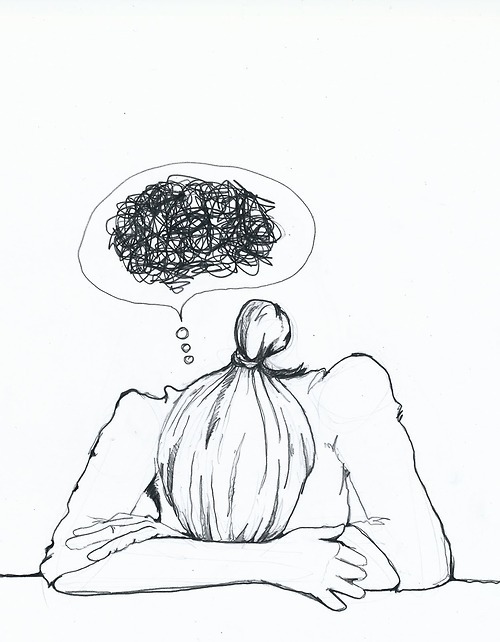
sketch of question personOK… so I’ve been wrestling with my opening chapter for what seems like forever. I’ve read many writing craft books. One craft book says the author can’t mess with normal until your reader knows what normal is.

And so I’ve arrived at a quandary… how do I hook my reader [and my first reader is an agent] with the inciting incident and show my main character’s normal life at the same time?

A while ago, I attended an event at a local library called Author Idol, where the 25 authors sitting in the audience had each submitted their anonymous first three pages. The four agents up on stage raised one hand when the reader came to a place where the agent would reject the manuscript. Two agents’ hands in the air signaled the reader to stop. Would it surprise you to hear that most of us didn’t get past the first two paragraphs???

How scary is that???

How perfect does that opening have to be???

What happened to editors???

If an agent is not willing to read at least the first three pages, what hope do I have of ever getting published?

So it’s back to the drawing board. On Saturday, I’ll submit to my writing group yet another attempt at my opening. My fingers are crossed that I’m at least getting closer.


Read Full Post »

sketch of question personThere are several publishing houses out there who do not require an agent. This sounds tempting until I read the fine print for their submission guidelines.

The one that I’m considering requests a query email, a 2-5 page synopsis and the entire manuscript as attachments.

My concern centers around my constant worry that someone will ‘borrow’ my story without my knowledge. Compared to the usual process that an agent requires, which is a query letter first, after which they request perhaps the synopsis and possibly the first three chapters, it seems to me that providing everything upfront, electronically, with no prior interaction with a human being puts me at somewhat of a disadvantage.

Am I being a bit paranoid? Probably.

I’d be interested to hear from those of you who are published whether you worked through an agent or dealt directly with a publisher.

Read Full Post »

In my inbox this morning sat an email from an agent I recently queried. She represents another cozy mystery writer in the Sisters In Crime organization, and was recommended to me by another agent.

My fingers paused above the file, not sure if they wanted to open it or not. Would I be lucky and get a hit on nearly my first try? Or would she tell me ‘Thanks, but no thanks.’ ???

After several minutes of debate, I hit the enter key and zoomed in on her words like a starving writer…only to be disappointed. Her rejection said my hook was not sufficient to interest any of the editors she knows.

Big sigh.smiley face maybe next time

I’ve been told by both my writing groups that I’ve written a good story, so I’ll be pulling down my how-to books about query letters and improving this one paragraph description by echoing the tension and frustration of my main character.

On a positive note, the only way is up!

Read Full Post »

emotion

Traveling this long and interesting road since I decided to try my hand at writing a novel has been a real eye opener. Who knew there was so much involved in putting my story on paper? I respect authors who have written an engrossing story, then managed to find an agent and a publisher. On the other hand, I’m sometimes disappointed with the quality of writing, wondering how a book managed to get published at all.

This brings me to my fear of putting my story out there if it’s not as perfect as I can make it. Fascinating characterization, interesting setting, thoughtful plot line, and control of back story.  I’ve become a great lover of books written to educate a new writer. Most recently, I bought one called “The Emotion Thesaurus”. It  provides a laundry list of examples to write the emotions of your characters without falling into the trap of cliche. As my writing group points out on a regular basis, I sometimes forget to include my protagonist’s emotions, assuming that the reader understands what’s going on in my characters’ heads. Wrongo!

As I’ve been reading through this new how-to book, I’m inspired to go back into my story and find places where the emotional impact of a scene can be more accurately shown…never told!…to make my protagonist more human.

If you have a favorite book about the craft of writing, I’d love to hear about it. Always looking for new volumes to add to my ever-expanding library.


Read Full Post »

…to send it out!!!

After many, many revisions, my story finally begins in the right place…I think.

My stronger protagonist encounters the “inciting incident” by the end of page seven.

I’ve moved evil back story into future chapters.

I’ve eliminated narrative that interrupts the plot.

I’ve eliminated duplications and replaced weak verbs with stronger ones.

I’ve been mindful that my internal and external character arc mesh and mingle.

I’m hopeful that readers will be hooked and not put it down until page 309…The End.

So why am I petrified to enter it into a contest for first time novelists!

Where do I find the nerve to JUST DO IT? …no idea.

My calendar is marked with a deadline of mid-October… will I push the button? Stay tuned.

Read Full Post »

During the past two weeks, I’ve been participating in an on-line course titled: “Revising Without Getting Sick of Your Manuscript” by Sylvie Kurtz.  The lessons were provided daily via both email and the Yahoo Group website. Each day brought a different aspect of writing fiction:

8-20 – 1.  Introduction

8-21 –  2.  General Outlook

8-22  – 3.  Plot and Structure

8-23 –  4.  Point of View

8-24  – 5.  Scenes

8-25 –  6.  Characters

8-27 –  7.  Dialogue

8-28 –  8.  Backstory

8-29 –  9.  Opening and Endings

8-30 – 10.  Voice, Style, and Details

8-31 – 11.  Conclusion

Sylvie is a fount of knowledge for each topic and provided examples to illustrate the point of each lesson. Her explanations and guidelines were easy to understand. But the best part of it all was her feedback! With her guidance, I now own a respectable pitch that I can send off to agents and publishers.

If you ever have the opportunity to take a course with Sylvie, I highly recommend that you do!

Read Full Post »

There’s a dramatic scene toward the end of my novel that begins to resolve the mystery. But I had the hardest time getting this chapter through one of my two writing groups.

The intention was to show frenetic activity as each character stumbled over the others. At first, I had each character’s actions shown in full. Then I tried alternating paragraphs of each characters’ actions to show everything happening at once.

Yesterday, as I went back and forth between the group comments and my subconscious muse, I finally figured out what was sending this scene off on the wrong track.

Too many characters too soon!

And so, I’m busy re-sequencing the timing to bring them into the scene one at a time instead of having all of them there at the beginning. One character finishes before another one enters to interact and move the story along. It seems to be flowing much better. Such a relief.

But wait! I shouldn’t get too excited yet… what if the group still doesn’t think it works???


Read Full Post »

I’ve been fighting with my opening scene for quite some time now.

First is the opening sentence… how to come up with those clever words to convey not only the necessary hook, but have the thought connect indelibly to the plot?

And then there are those opening paragraphs and the scene itself. An agent recently told me that beginning with a phone call was not interesting enough, so I’ve moved it to my character’s arrival at the music shop, where the inciting incident happens. But in those first few pages, I also need to introduce my protagonist, set the scene, and connect what’s happening to her story-worthy problem, even if she doesn’t know what it is yet. And all without a lot of back story… my personal downfall.

A tall order? You bet! I’ve managed to arrive at the inciting incident by the end of page 6, but I’m thinking that’s still not soon enough.

And so, I will continue to massage the words on the page until it reads as succinctly as I can make it.

Will I ever have a manuscript worthy of submitting to an agent or publisher? Good question.

Read Full Post »

Revise, revise!

The revision process is time-consuming, but at the same time, gratifying. Whenever I read another book on the craft of writing…and I have read many…there is always some piece of advise that makes sense to me, and I go back into my chapters and write what I hope are improvements.

The most recent craft book I’m reading is called “Characters, Emotions, and Viewpoints”, and is one of the best collection of hands-on advice that I’ve read for that facet of writing fiction. Creating the characters without just laundry-listing a description is one of the toughest challenges. The key is to sprinkle their description and personality as I go, and not to lump it all at the beginning. Leave a little more to be discovered later in the story. How delightful!

I’ve also just converted a scene at the police station from narrative and boring repetition to what I hope is a more exciting and tension-filled episode. Only my readers…current and future… will be able to tell me if I’ve succeeded.

It occurs to me that although it is taking me a long time to finish my novel, I justify my slowness with the fact that I’ve practically rewritten the entire story, although the basic plot has not changed. It begins on a different day [closer to the action], has more interesting characters…I hope… and moves along at a good pace without getting stuck in backstory and menial distractions. my downfall when I first began this project. Not to mention that I feel satisfied that I’ve found my style.

Back to the keyboard!

Read Full Post »

« Newer Posts