Feeds:
Posts
Comments

There’s a dramatic scene toward the end of my novel that begins to resolve the mystery. But I had the hardest time getting this chapter through one of my two writing groups.

The intention was to show frenetic activity as each character stumbled over the others. At first, I had each character’s actions shown in full. Then I tried alternating paragraphs of each characters’ actions to show everything happening at once.

Yesterday, as I went back and forth between the group comments and my subconscious muse, I finally figured out what was sending this scene off on the wrong track.

Too many characters too soon!

And so, I’m busy re-sequencing the timing to bring them into the scene one at a time instead of having all of them there at the beginning. One character finishes before another one enters to interact and move the story along. It seems to be flowing much better. Such a relief.

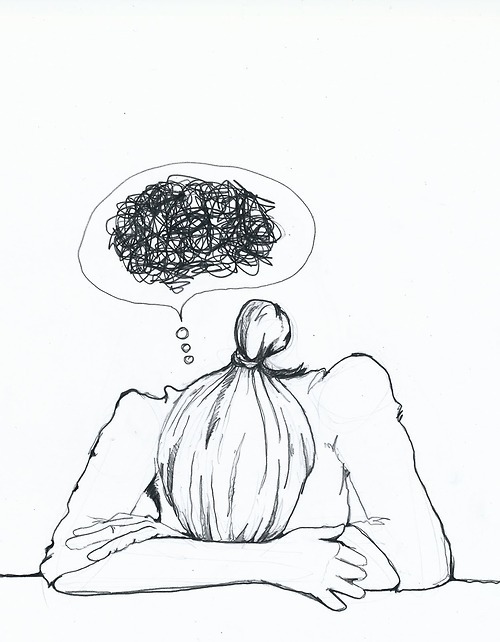
But wait! I shouldn’t get too excited yet… what if the group still doesn’t think it works???


I’ve been fighting with my opening scene for quite some time now.

First is the opening sentence… how to come up with those clever words to convey not only the necessary hook, but have the thought connect indelibly to the plot?

And then there are those opening paragraphs and the scene itself. An agent recently told me that beginning with a phone call was not interesting enough, so I’ve moved it to my character’s arrival at the music shop, where the inciting incident happens. But in those first few pages, I also need to introduce my protagonist, set the scene, and connect what’s happening to her story-worthy problem, even if she doesn’t know what it is yet. And all without a lot of back story… my personal downfall.

A tall order? You bet! I’ve managed to arrive at the inciting incident by the end of page 6, but I’m thinking that’s still not soon enough.

And so, I will continue to massage the words on the page until it reads as succinctly as I can make it.

Will I ever have a manuscript worthy of submitting to an agent or publisher? Good question.

This afternoon, I returned from an educational weekend session with three literary agents. This event was sponsored by the Cape Cod Writers Center, and held at the Colonial House Inn in historic Falmouth, Massachusetts. This old sea captain’s house is one of several that claim ghosts in residence, but none of them visited me during the night!

The three agents guided the fourteen attendees through informative hour-long talks scheduled between the one-on-one sessions with each author. Katherine Sands from NYC spoke about “How to Discourage an Agent Even if You’re a Brilliant Writer”. Paul Fedorko from NYC shared his thoughts about “Finding the Right Agent for You”. And last, but certainly not least, Ann Collette from Boston provided her insight into “The Do’s and Don’ts for Mystery/Thriller Writers”.

My personal one-on-one session was scheduled with Ann Collette on Saturday afternoon. I found Ann to be a delightful woman with a quick wit and a sharp eye for quality. She’d already reviewed and made notations on my first 10 pages. Her suggestions were pointed and constructive, given always with a kind manner and an encouraging smile. As I left our session, my head was bursting with her ideas to improve my storytelling skills and notch up my chances for publication down the road.

Later on Saturday afternoon, we all gathered together to hear Ann and Katherine discuss “Writing the Query Letter”, which was a real eye opener. Concentrate on the unique facets of your story… setting-protagonist-problem. Or as Katherine says, place-person-pivot. Your carefully chosen words need to jump off the page and grab the agent’s attention.The goal is to make the agent want to read more.

Sunday morning provided a three-hour Q&A session with Ann and Katherine, who fielded questions from the attendees. They also shared surprising agent stories as they related to clients found and lost, or passed and regretted. It was an enlightening discussion, and gave us all insights into the inner workings of the agent’s job.

I’m sure I can speak for all the attendees when I say the weekend was well worth the time and cost to attend.

And, so, here I sit at home computer. I’ve pulled up my manuscript and have begun the revision process. As I work, Ann’s thoughts make sense to me, and I don’t feel like I’m sacrificing any of the words that are being deleted. These revisions are only making my story better… whew!

One of the organizations I belong to… “Sisters in Crime”, is co-hostessing an event with “Mystery Writers of America” this coming Wednesday called “Author Idol”  The three agents on the panel will provide feedback on what makes them stop reading a manuscript submitted for consideration. Here’s how it’s going to work:

…each author who wants to participate will place the first three pages of their novel in a box

…a ‘reader’ will randomly select one of the stories, and begin reading

…when any of the three agents hears something that would make them put the manuscript aside, they will ring their bell. The reader continues the story.

…a bell ringing from a second agent halts the reading

…the agents will then share with the audience the why behind their decision to place the manuscript in the rejection pile.

This exercise is going to prove very useful to every author in the audience, whether they submitted three pages for the event or not. It should certainly help all of us hone those opening pages to hook an agent or publisher into reading further.

I’m really looking forward to attending!


I key-stroked “The End” on my first mystery months ago, but continue to revise, revise, revise. Sending chapters through two different writing groups always elicits valid comments. Although the story reads easily with active verbs and definitive description, there might be a glitch with a chunk of dialogue or a mis-match of logic to previous clues. It all needs attention.

And so I’m nervous about sending a query to a publisher who requires that my novel be finished and POLISHED. Will my story ever REALLY be polished enough to submit? I’ve heard it said that we could revise our story forever if we choose to do so. At what point do we stop? I suppose the fall-back position is that even if I think it’s done, my agent–if I ever find one–and the editor at the publishing house—if they ever hold my manuscript in their hands–will have their own ideas about sections that need revision.

Actually, to put a little pressure on myself to finish the first novel, I have begun my second. Not very far in, but I know who is done-in, and who-done-it. The inciting incident has been established. I’m wrestling with the reason behind the crime. Several possibilities are floating around in my head. I just have to pick the one that seems most logical and can be justified to a degree that is believable.

Well, that’s enough moaning and groaning for this morning.


Yesterday, I attended an all day seminar in Hyannis, MA, sponsored by the Cape Cod Writers Center. The morning presenters shared their knowledge and experience with preparing printed books or manuscripts for e-book publication. It’s much more involved than I would have ever thought. But first thing this morning, I reformatted my entire novel in WORD!

The afternoon speaker from Grub Street spoke about marketing and self-publishing. She sees the big-box publishers as unfair to authors and quickly becoming dinosaurs. There are many relatively-new services out there for the express purpose of helping authors prepare their manuscripts for either or both e-publishing and self-publishing. The expense is not as big as you would think and is becoming more attractive for authors all the time. The payback when your book sells is a bigger piece of the pie than you’d ever receive from a main-stream publisher.

Given my recent disappointment with an agent search, I find I’m leaning more and more toward self-publishing, with the sister offer of an e-book.The best words of advice? Read any contracts carefully and don’t box yourself in with only one distributor!

And so, I now need to master the art of marketing through the social networks!


Agent Update

It’s not good news… sigh.

It’s not bad news… sigh, again.

After three months of waiting, I finally received a response from the agent who’s been holding my first three chapters since November. She advised that she’s no longer accepting new clients.

I can’t say I’m surprised. Hitting the jackpot my first time out was a slim-to-none chance.

So now, it’s back to the drawing board, so to speak. A writer friend has given me the names of three publishers who do not require an agent. Unfortunately, one of them is closed to submissions until August.  The other two advise 12-16 weeks to respond to my submission.

On a positive note, that time frame will expire by the time the Cape Cod Writers Center conference occurs in August. They will be offering a “Pitchapalooza” of agents. Think of it as speed-dating! http://capecodwriterscenter.org/

Off I go to prepare my query letter for publisher #1… wish me luck!


Well, its been two months since I emailed my first three chapters to the agent from CrimeBake. Because of the holidays… Thanksgiving, Christmas, New Years… I decided it was only fair to allow her extra time to read those chapters and get back to me.

I’ve been nervous about asking her… do I really want to hear what she has to say?

But I’m telling myself I’m totally prepared for her to tell me that my story is not quite what she’s looking for. Not many writers hit the jackpot first time out.

My fingers are crossed. My toes are crossed. So how much time do I allow for her to answer? How soon to follow-up on a follow-up?

The Waiting Game

Several weekends ago, I ‘pitched’ my novel to an agent at the New England Crime Bake, the annual conference sponsored by both Sisters in Crime and Mystery Writers of America.

Sitting on the other side of the table from the agent was not as daunting as I had expected. She smiled at me, and I explained the story behind my novel. After asking a few questions, she looked at me and said, “Here’s my card, email your first three chapter.”

YEA! It was all I could do not to jump up off my chair and dance around the room. But, of course, I didn’t, being a completely professional person. I thanked her as we shook hands, and exited the room, passing the next author in line on my way out.

And so I sit and wait for her to find the time to read my chapters and get back to me with either good… or bad… news. The good news would be if she sayd, “I like your writing style and your characters sound interesting. Your story has potential, so I’d like to read the remaining chapters.”

The bad news would be, “I’m sorry, but your novel is not what I’m looking to publish right now.” That would be so disappointing, but I’m prepare to hear those words as well.

And so I sit and wait.


Revise, revise!

The revision process is time-consuming, but at the same time, gratifying. Whenever I read another book on the craft of writing…and I have read many…there is always some piece of advise that makes sense to me, and I go back into my chapters and write what I hope are improvements.

The most recent craft book I’m reading is called “Characters, Emotions, and Viewpoints”, and is one of the best collection of hands-on advice that I’ve read for that facet of writing fiction. Creating the characters without just laundry-listing a description is one of the toughest challenges. The key is to sprinkle their description and personality as I go, and not to lump it all at the beginning. Leave a little more to be discovered later in the story. How delightful!

I’ve also just converted a scene at the police station from narrative and boring repetition to what I hope is a more exciting and tension-filled episode. Only my readers…current and future… will be able to tell me if I’ve succeeded.

It occurs to me that although it is taking me a long time to finish my novel, I justify my slowness with the fact that I’ve practically rewritten the entire story, although the basic plot has not changed. It begins on a different day [closer to the action], has more interesting characters…I hope… and moves along at a good pace without getting stuck in backstory and menial distractions. my downfall when I first began this project. Not to mention that I feel satisfied that I’ve found my style.

Back to the keyboard!